


Resource Article
What Are the Best Replacement Windows for Your Bathroom?
Key takeaways:
- Bathrooms have unique window requirements: moisture resistance, privacy, and ventilation all matter more here than in most other rooms.
- Awning, double-hung, and sliding windows are the most common choices, each with different strengths for privacy, light, and airflow.
- Patterned glass (often called frosted glass) lets in natural light while maintaining privacy and adds a decorative touch many homeowners love.
Bathrooms can be one of the most overlooked rooms when homeowners think about windows. You want light, but not a fishbowl situation. You want ventilation, but the window has to stand up to daily steam and moisture. And if it’s placed near a shower or above a soaking tub, it may need to work double duty.
In this guide, we'll walk through what makes bathroom windows unique, how placement shapes your options, which styles work best and why, and how patterned glass can help solve the privacy problem without sacrificing light. By the end, you'll have a clearer picture of what to look for and how to make a confident decision for your home.
Critical Considerations for Bathroom Windows
Bathroom windows face conditions that windows in other rooms simply don't. Steam from hot showers, consistent humidity, and moisture near a tub or sink all put different demands on window placement and material selection. And it's important to note that direct water exposure should be avoided.
Moisture is the biggest factor. Bathrooms generate more humidity than almost any other room in the house. Over time, that moisture can work against window frames, seals, and hardware.
When you're evaluating replacement windows for a bathroom, frame material matters. Frames that resist moisture, swelling, and rot will hold up better over time than those that don't.
Privacy is also a consideration. Many bathrooms sit in spots where neighbors, passersby, or guests could easily see in. But that doesn't mean you have to sacrifice natural light. Glass type and window placement can be solutions to this problem.
Ventilation matters more than ever. Bathrooms need airflow to clear steam and help prevent mold and mildew buildup. Often that is aided by a bathroom exhaust fan – but opening a window is another option and can be a simple and effective way to help improve bathroom ventilation.
Which Windows Work Best in a Bathroom?
The best window style absolutely depends on where the window is placed in the room. Is it above a soaking tub? Near a shower? Facing a neighbor’s kitchen? Pointed at miles of forest? We’ll get into what makes most sense for each of these scenarios.
There are three styles that homeowners and designers choose most often in bathrooms. Each has a clear strength, and each comes with downsides too.
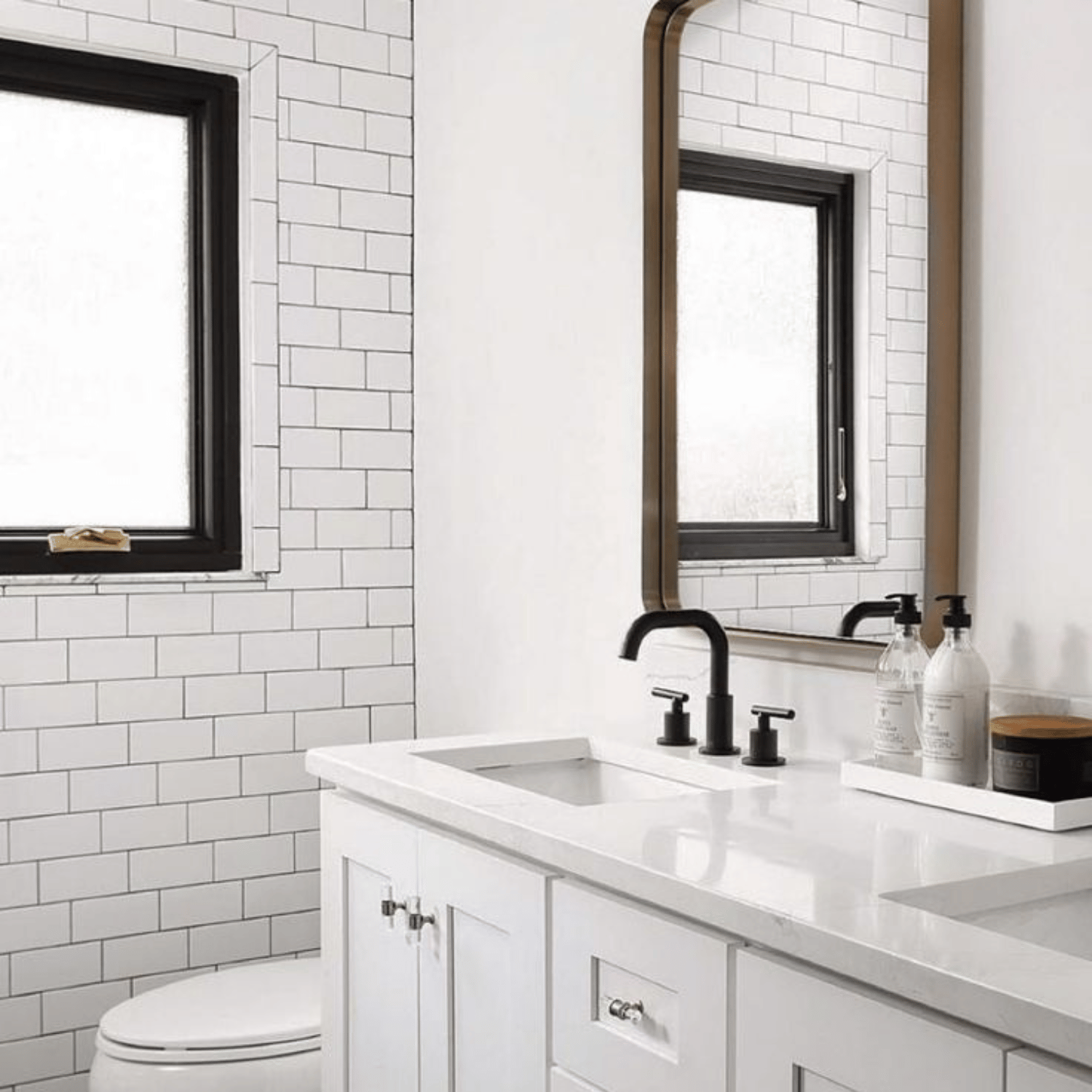
Awning windows: Best for privacy
Awning windows are hinged at the top and open outward from the bottom. They're a smart pick for bathrooms because they can be installed higher on the wall, where they provide light and airflow without putting the glass at eye level.
Best for: Privacy. Because awning windows work well when placed high, you often don't need special glass to maintain privacy. You get ventilation and natural light without compromise.
Downside: The outward-opening sash can feel awkward in a tight space if the window isn't positioned carefully.
Sliding windows: Best for ventilation
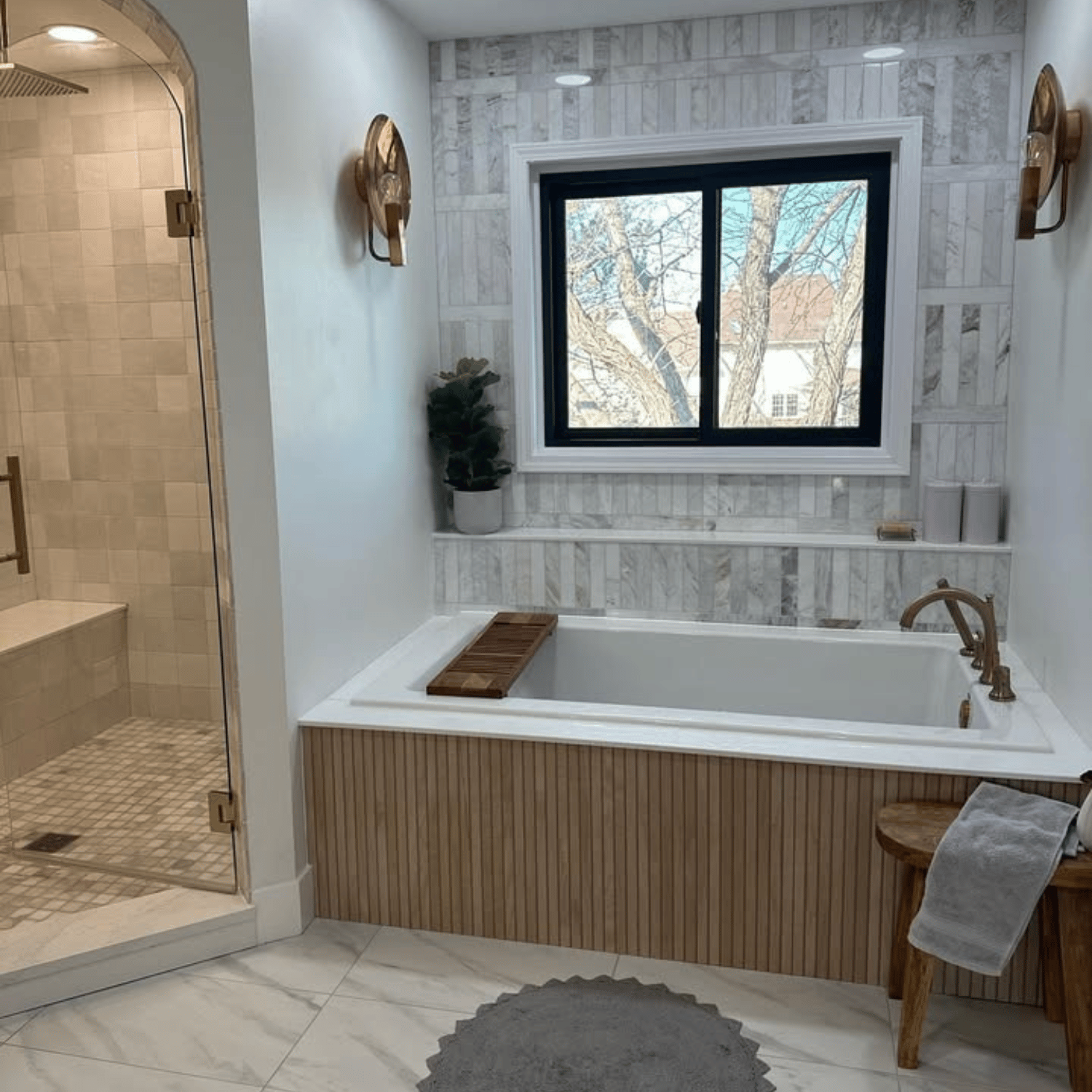
Sliding windows open horizontally, with one or both sashes gliding along a track. They're particularly practical in bathrooms because they're easy to operate: no cranks, no outward opening, just a simple push or pull.
Best for: Ventilation. Sliding windows can open across a wide span, which allows strong airflow from the top to bottom of the opening. They’re easy to open when you’re soaking in a tub (provided the window does not get direct exposure to water). The cross-ventilation they provide are effective at helping clearing steam quickly.
Downside: Sliding windows are best suited for horizontal openings, so they're not always the right fit for every bathroom layout. Like double-hung windows, they may need patterned glass if they're placed at a height or location that allows a direct line of sight from outside.
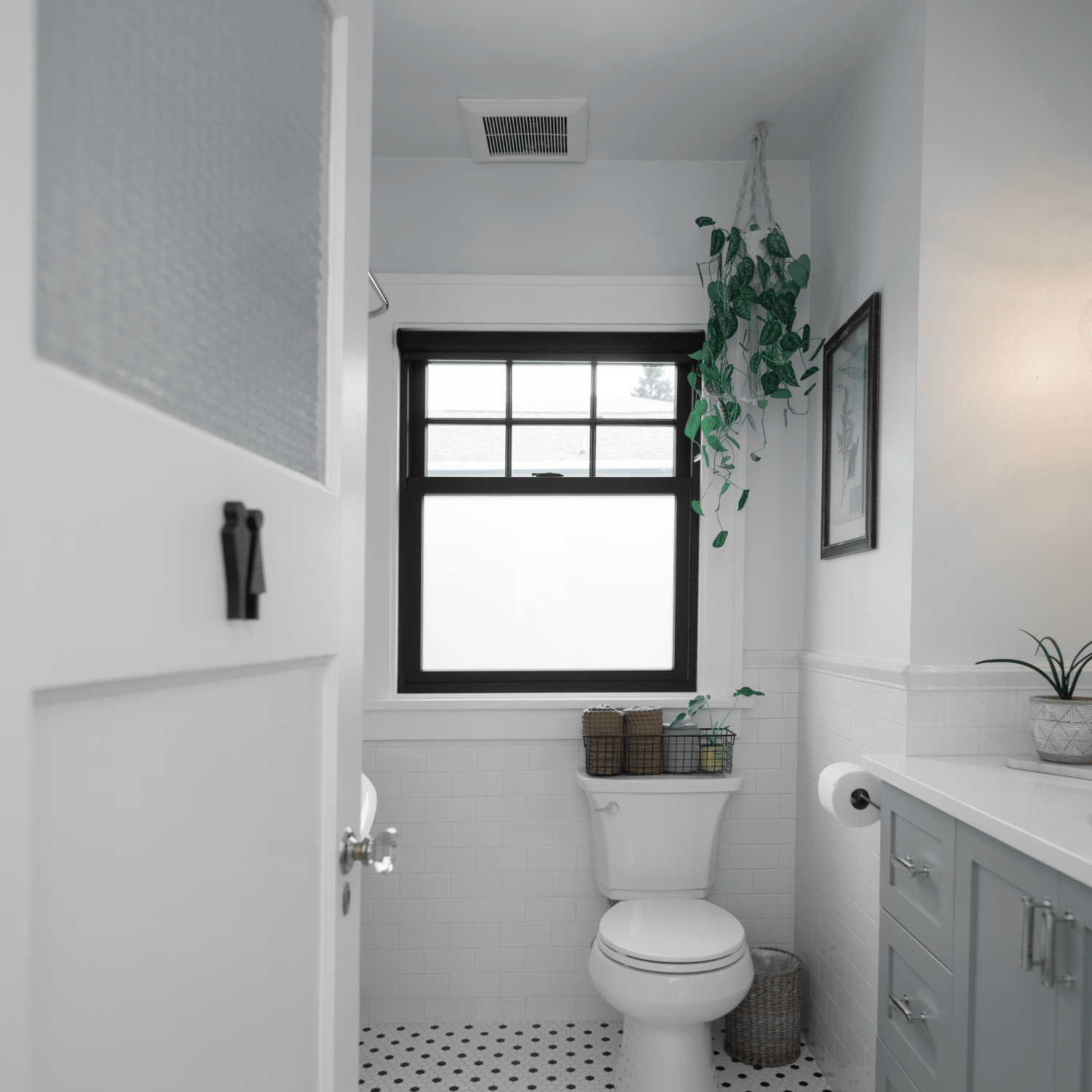
Double-hung windows: Best for natural light
Double-hung windows have two sashes that slide vertically. Both the top and bottom sashes can open, which gives you options for controlling airflow. They're one of the most common window styles in homes, and they work in bathrooms when paired with the right glass option.
Best for: Natural light. Double-hung windows typically have a large glass area, making them a good choice when you want to brighten a smaller bathroom.
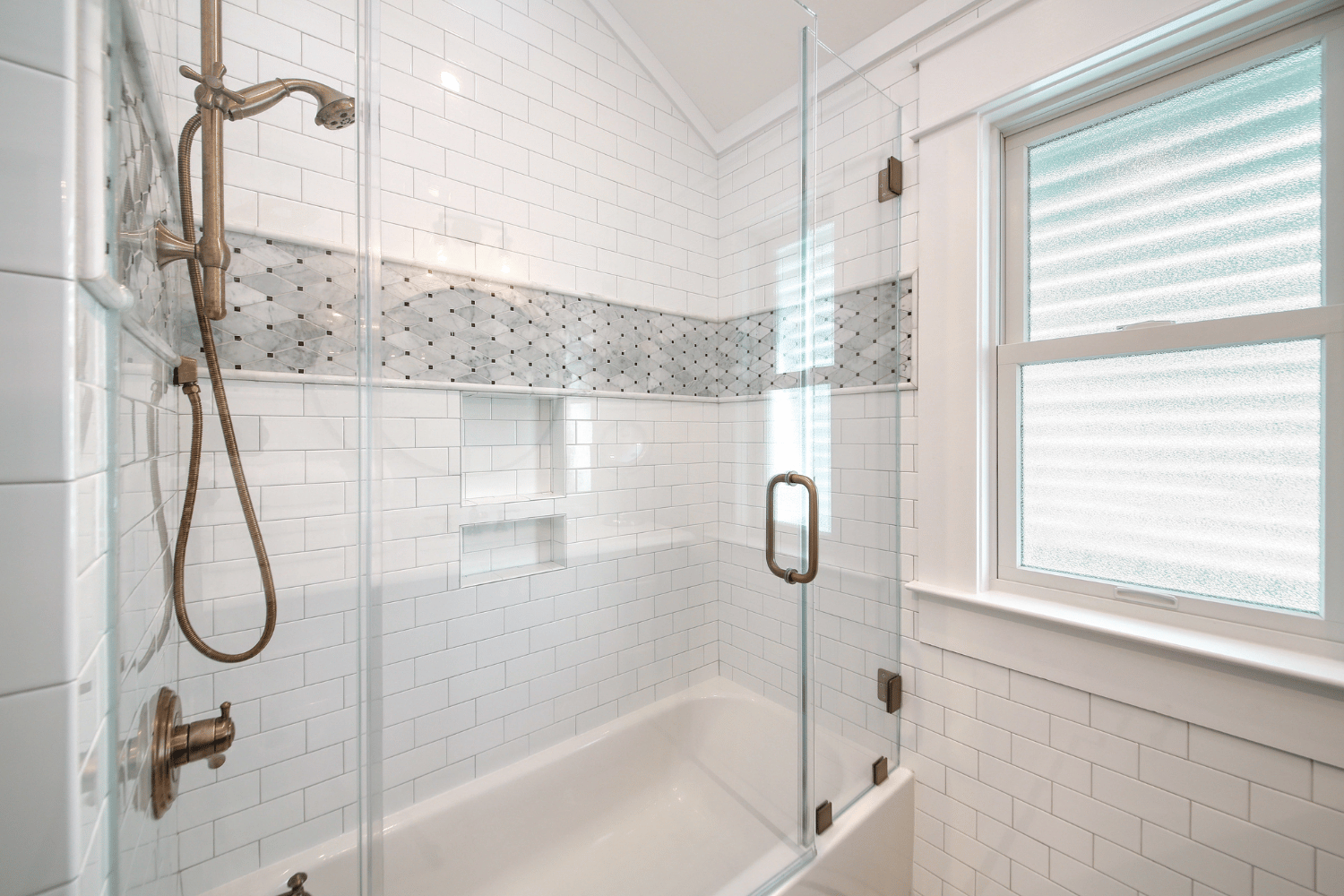
Downside: Privacy can be a concern if the window faces a neighbor or a street, especially at lower placement. This is where patterned glass becomes a useful option: it can cover the full window or just the bottom sash, letting the top sash bring in unobstructed light while the lower half helps preserve privacy.
Picture windows: Best for unobstructed views
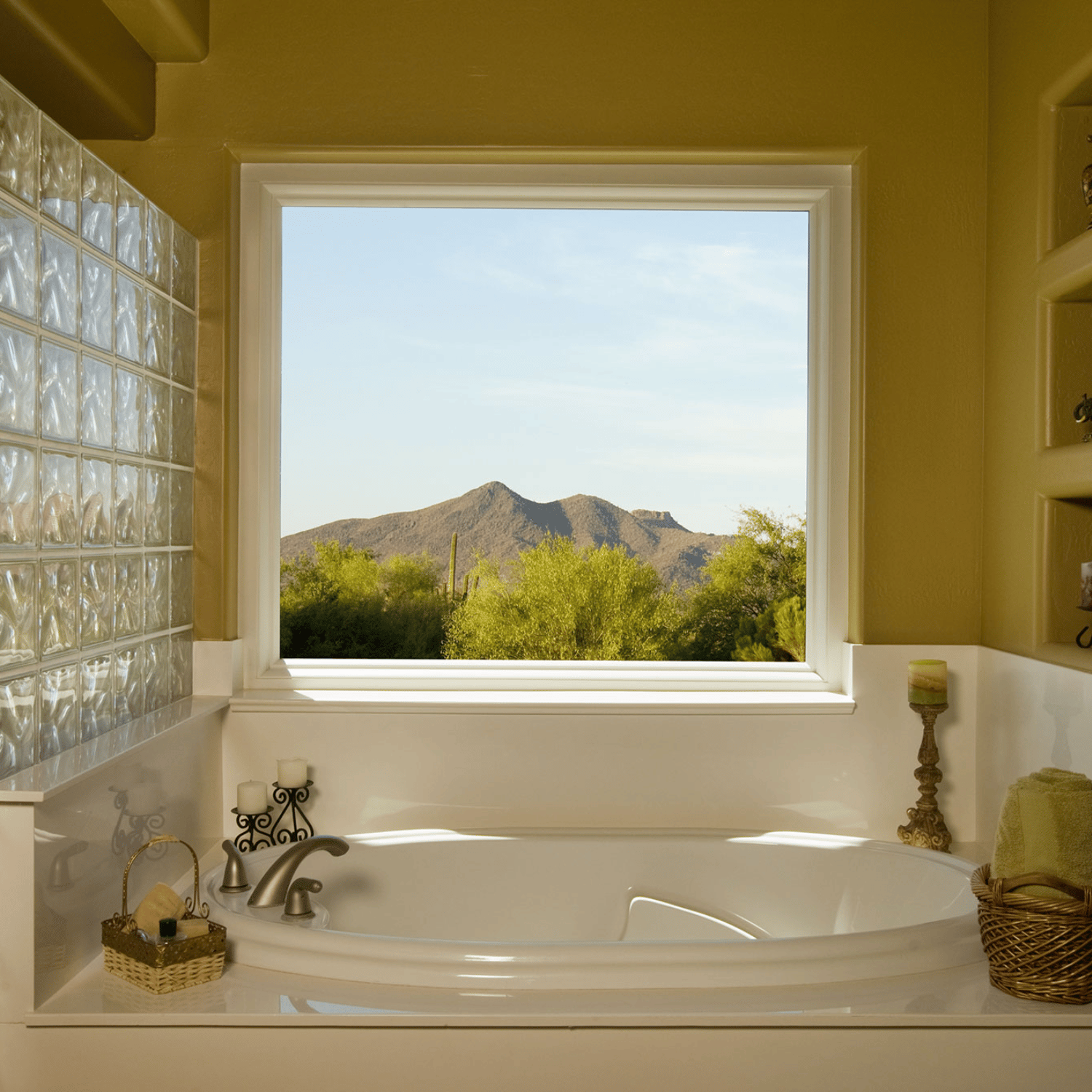
Picture windows do not open, so they’re not the right choice when ventilation is the top priority. But in the right bathroom, they can be an excellent option for bringing in abundant natural light and showcasing a scenic view without visual interruptions from meeting rails or operable sashes.
Best for: Unobstructed views. Imagine this: a huge picture window directly above a soaking tub. Relax in a hot bath while you enjoy the best view in the house.
Downside: Because picture windows are fixed, they do not provide airflow. In bathrooms where ventilation is important, they typically work best when paired with an exhaust fan or combined with an operable window elsewhere in the room. Privacy can also be a concern depending on placement, so you might still want patterned glass if the window faces neighbors or street traffic.
What About Glass Understanding Your Options
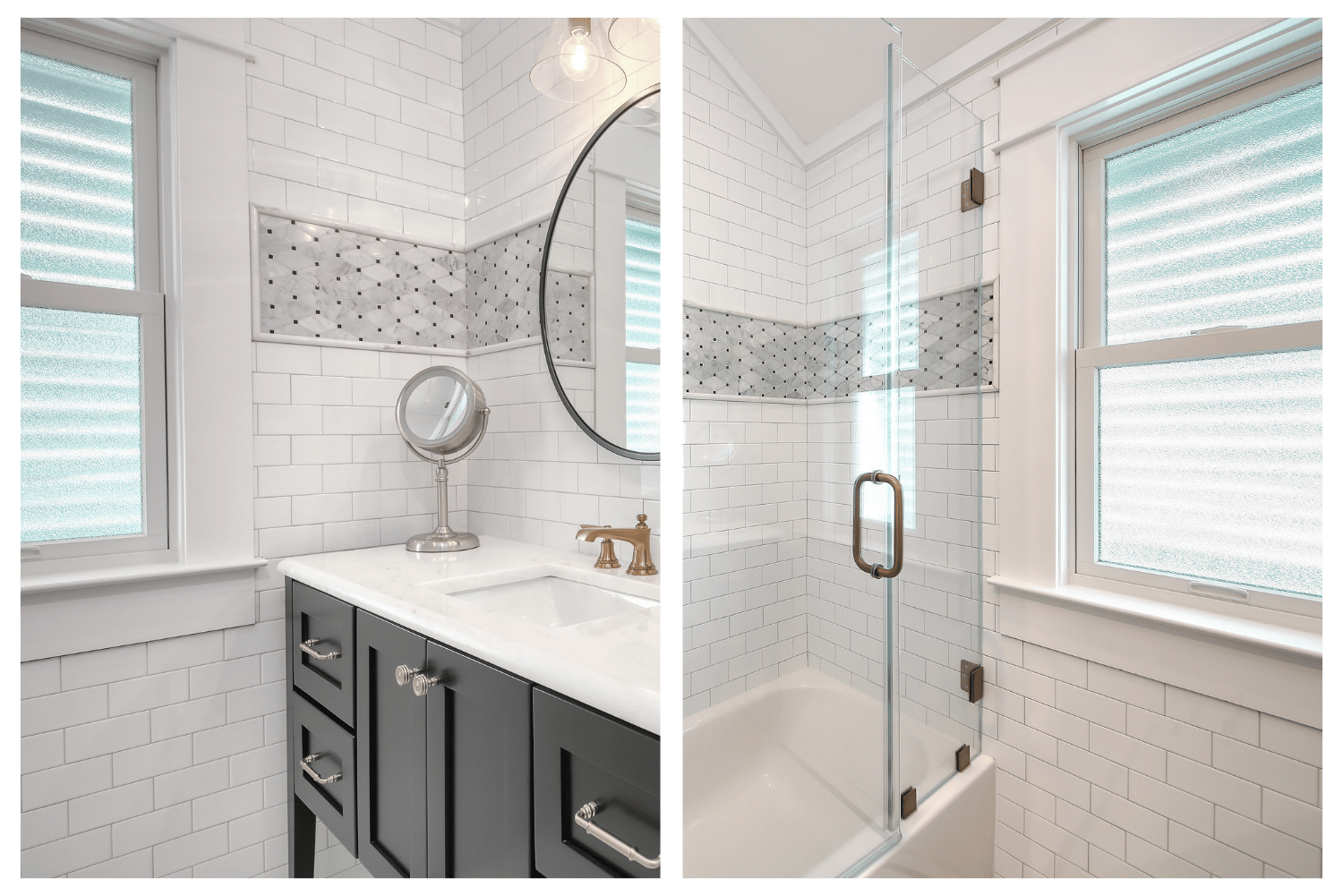
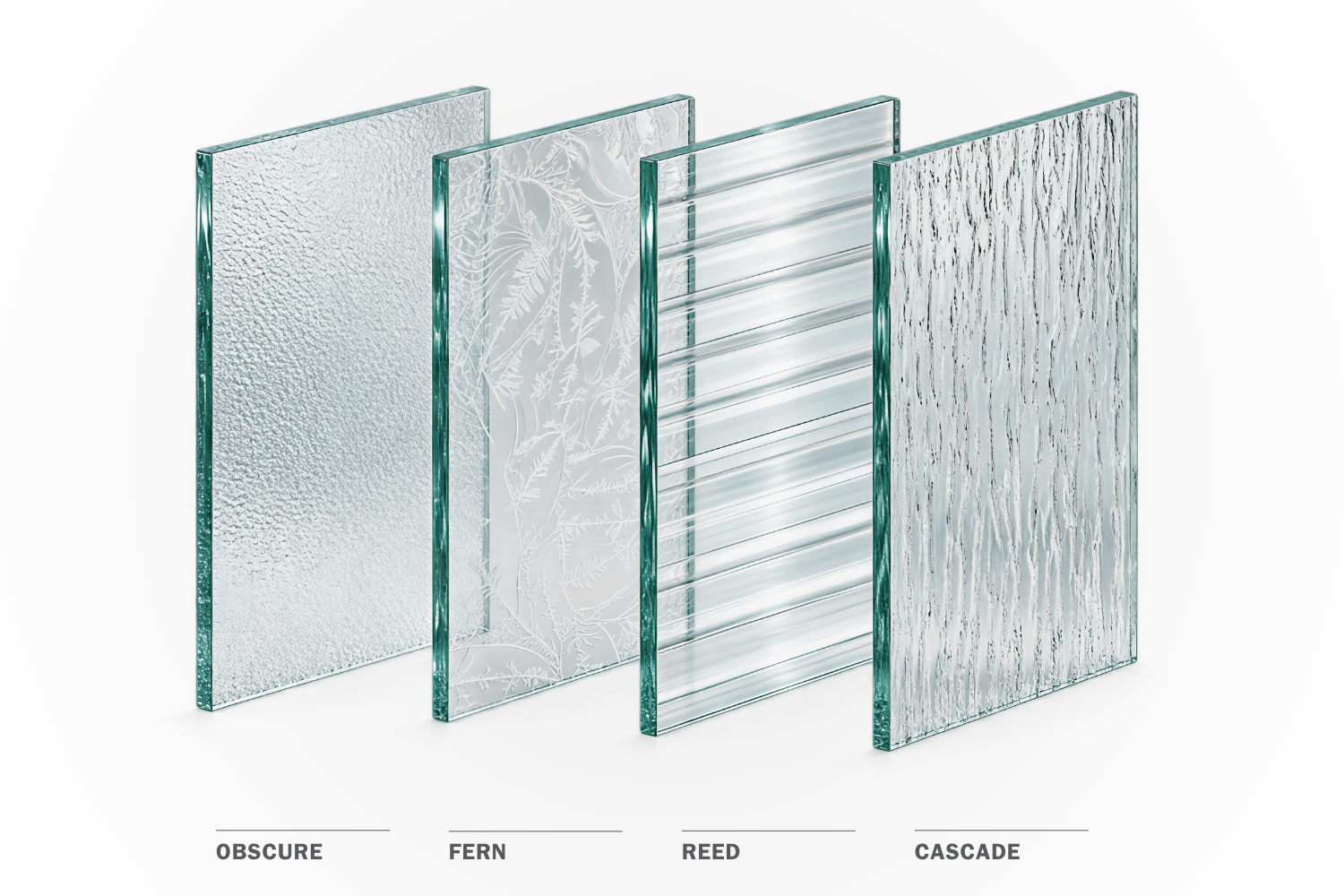
You’ve probably heard of frosted glass; this is a type of patterned glass, and it’s one of the most practical solutions in bathroom design. It covers a range of decorative finishes that help obscure the view from outside while still letting a considerable amount of light through.
Patterned glass adds a decorative element on top of the functional aspects. Many patterns have real visual character that can add to the look of a bathroom rather than just solving a problem.
A few things to know:
- Patterned glass works on any operable window style: awning, double-hung, or sliding.
- On a double-hung window, you can have patterned glass on just the bottom sash. That way, the top sash stays clear for maximum light while the lower portion helps handle privacy at eye level.
- Patterned glass helps obscure the view while still letting in natural light.
Renewal by Andersen offers several patterned glass options for homeowners who want privacy without losing light:
- Obscure: The classic frosted look. Diffuses vision completely while still allowing light to filter through.
- Fern: A nature-inspired pattern with a delicate, organic texture.
- Reed: A vertical or horizontal linear pattern with a clean, contemporary feel.
- Cascade: A flowing, water-like pattern that's especially fitting for a bathroom.
Interior designer Breegan Jane chose patterned glass in the guest bathroom for her southern California beach house renovation. “This is actually one of my favorite windows in the entire house. I wanted a window here, but this is a bathroom, so privacy was a concern. I made sure that the bottom was frosted so that I didn't have to put window treatments in here, and so that my guests could see the view.”
What about safety glass?
Under International Building Code 2406.4.5, a window within 60 inches of a shower or bathtub is considered a hazardous area and requires safety glass. Safety glass is a category of glass that includes tempered, laminated, bullet-resistant, and wired glass.
Besides this code, your area may have additional building codes, so check with your local building code authority to see what's required for your area.
Does Frame Material Matter More in a Bathroom?
Yes, frame material matters more in a bathroom than in many other rooms. The combination of humidity and moisture creates a more demanding environment for window frames.
- Vinyl frames are low-maintenance and handle moisture reasonably well, but they can expand and contract over time with repeated temperature fluctuations. In a bathroom, that movement can eventually affect fit, seal performance, and ease of operation.
- Wood frames offer a classic look, but they typically require more upkeep in a bathroom setting. With repeated exposure to moisture and humidity, wood can swell, stick, and become more vulnerable to rot if it is not properly maintained.
- Composite frames, like those made with Fibrex® composite material used in Renewal by Andersen® windows, can handle humidity better than other frame materials. It also stands up to temperature extremes without warping, doesn’t require painting, and is easy to clean over time, which makes it a practical fit for bathrooms.
For many bathrooms, a window frame material that helps resist moisture, hold its shape, and stay low maintenance is the best option.
Ready to Find the Right Window for Your Bathroom?
Choosing a bathroom window involves more decisions than most homeowners expect: style, placement, glass type, and frame material all play a role. If you'd like help sorting through your options, a free in-home consultation with Renewal by Andersen is a good place to start. There's no pressure involved, just a conversation about what your bathroom needs and what options fit your home. Schedule a consultation when you're ready to chat.
*See Renewal by Andersen® Products and Installation Transferable Limited Warranty for details.
Our Hassle-Free Process

Step 1
Design Consultation
Step 2
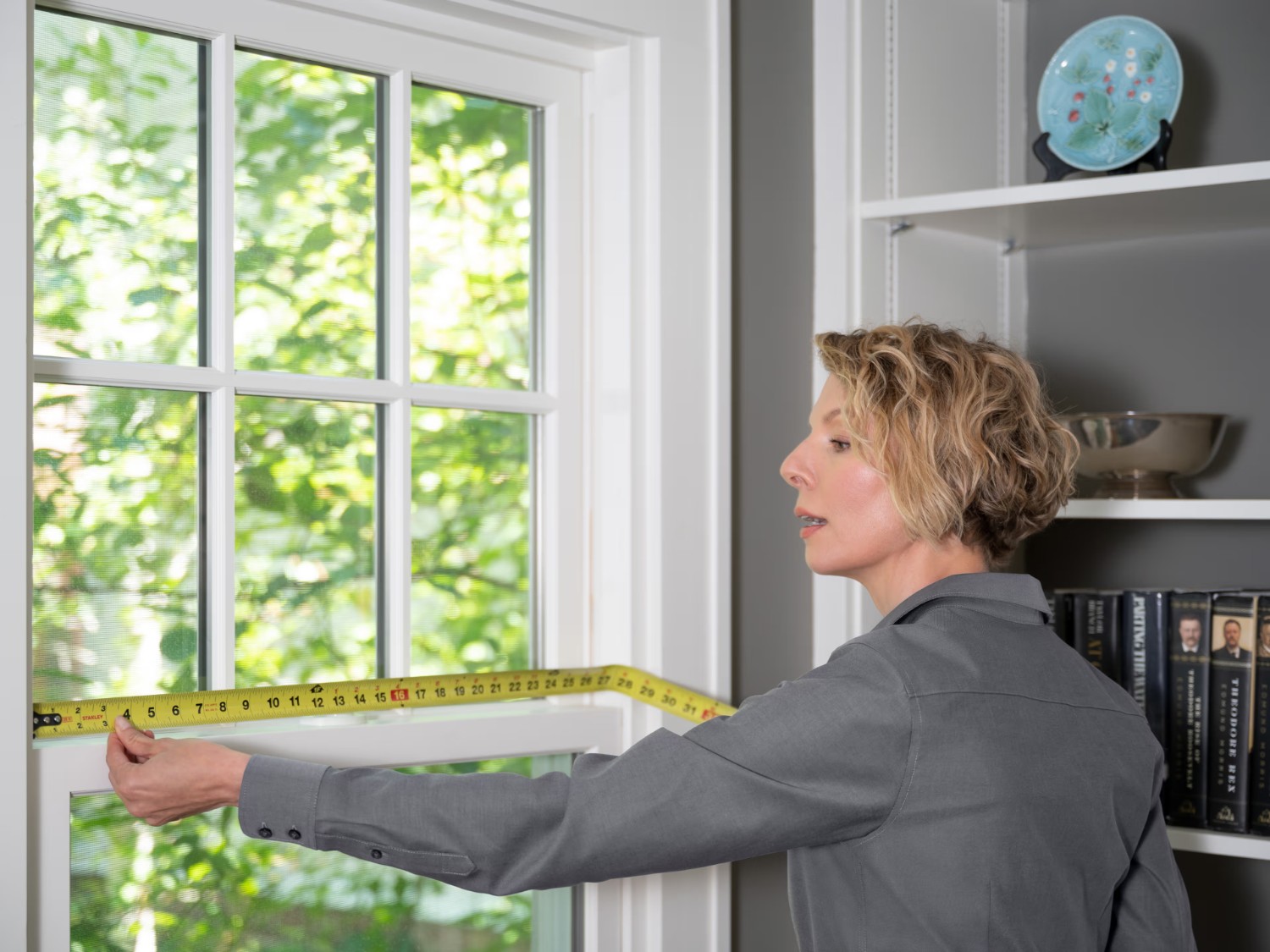
Measure and Manufacture
Step 3
Installation
Step 4