.png?h=455&iar=0&w=1182&rev=d74e300da7ba4627bde32b9c768419b5)


Resource Article
Window Glass Types: What’s the Best Option for Your Climate?
Key Takeaways
- Choosing the right type of glass for your window based on your climate can improve your home’s energy efficiency and could help reduce energy bills.
- Consider Low-E window glass if you live in a warm climate and want to keep the heat outside. Low-E4® SmartSun™ glass blocks 95% of harmful ultraviolet (UV) rays that can damage your drapes, artwork, framed photos, and furniture.
- Consider triple-pane window glass if you live in a cold climate and don’t mind spending more for an extra layer of insulating glass.
- Consider balanced-performance Low-E glass if you live in a climate that experiences mild warm and cold temperatures.
Homeowners who are considering replacing their windows often ask us how different types of glass make a difference. Can energy-efficient window glass actually save you money on your energy bills? And what are the differences between double-pane (or dual-pane) and triple-pane windows?
After replacing more than 12 million windows in North America, we’ve learned that the right type of window glass for you often comes down to your climate—hot, cold, or moderate. You can’t go wrong with double-pane windows, but triple-pane windows could help save you more money long term if you’re comfortable spending more money up front.
In colder climates, consider glass that can help keep heat inside. In warmer climates, consider glass that can help keep the heat out.
Keep reading to learn how climate affects glass choices, explore four factors that drive glass performance, and compare the pros and cons of double-pane vs. triple-pane windows.
How Do Different Climates Affect Glass Performance?
Where you live is one of the most important factors to consider when comparing different types of window glass.
If you live in a hot climate, consider glass that can reflect outdoor heat, provide strong UV protection, and help keep cool air inside. If you live in a cold climate, consider insulation performance and how well the glass helps keep heat inside.
No matter where you live or which type of glass you choose for your window, energy efficiency will play an important role in your home.
Is energy-efficient window glass worth it?
Windows can be a major source of energy loss. In fact, about 25%-30% of home heating and cooling energy can be lost through windows. But it doesn’t have to be this way.
Consider how energy-efficient windows could help you save money on your energy bills and help maintain a more stable temperature in your home. Replacing old windows with ENERGY STAR® certified windows lowers household energy bills by an average of 13% nationwide.
How Do Different Window Glass Types Make a Difference?
Most of what you see in a window is glass, yet glass isn’t always top of mind for homeowners. See how some window glass options could help you save energy, maintain and reflect heat, or bring in more natural light.
What Affects Glass Performance in Different Regions?
While it’s easy to overlook, the type of glass you choose plays an important role in how well your windows perform. Here are some of the top factors that can affect glass performance where you live.
U-Factor value
You’ve likely felt a chill from an older window on a cold day. That could be the heat escaping through the glass, and the U-Factor can tell you how fast it’s happening.
The U-Factor value measures the speed of heat loss or gain, which is more important in a cold climate. A lower U-Factor means your window can insulate better, helping retain heat and putting less stress on your home’s heating system.
The U-Factor is measured on a scale from 0 to 1. For example, a window in a very cold climate might have a U-Factor value of .30.
Solar heat gain coefficient
The solar heat gain coefficient (SHGC) measures how much of the sun’s heat passes through glass, which is important in hot and cold regions.
The solar heat gain performance is measured as a decimal between 0 and 1, representing the percentage of heat that enters the home. For example, if you see 0.21 on your window’s label, that means 21% of the sun’s heat is entering your home.
Bottom line: The lower the solar heat gain, the less strain you might put on your air conditioner and energy costs.
Visible light transmission
Visible light transmission measures how clear the window glass is and how much natural light can pass through. The higher the visible transmission rating, the more natural light can pass through.
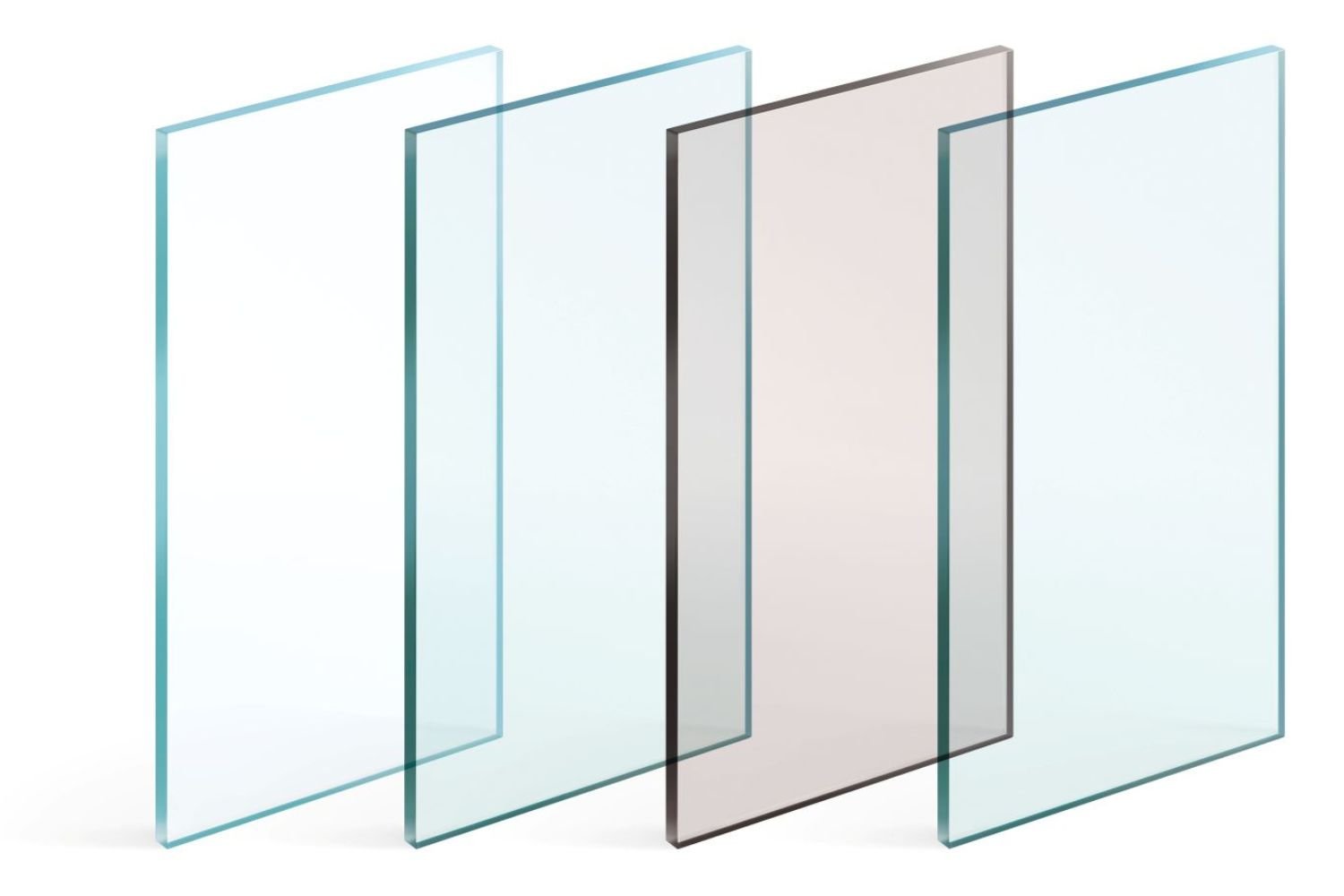
Window glass coatings
Window glass coatings, including clear double-pane glass, and low-emissivity (Low-E), can help you manage how much sunlight and heat enters your home. A glass coating that works well in Arizona might not perform the same in Minnesota, which is where climate makes a difference. A glass coating that works well in Arizona might not perform the same in Minnesota, which is where climate makes a difference.
Low-E coating is a thin, nearly invisible glass coating that reflects heat while still allowing visible light through. Many energy-efficient windows today use some form of Low-E coating.
Renewal by Andersen’s Low-E4® glass works well in hot and cool climates because it reflects heat in the summer and helps keep heat inside in the winter.
Pella, Marvin, and other window companies also offer windows with Low-E glass designed for all climates. High-Performance Low-E4® SmartSun™ glass from Renewal by Andersen is 70% more energy-efficient in the summer as compared to ordinary double-pane glass.**
**Values are based on comparison of Renewal by Andersen® double-hung window U-factor to the U-factor for clear dual-pane glass non-metal frame default values from the 2006, 2009, 2012, 2015, and 2018 International Energy Conservation Code “Glazed Fenestration” Default Tables.
Ultraviolet light protection
For window glass, ultraviolet (UV) light reduction measures how well it can block harmful UV rays.
Sunlight can brighten your home. However, over time, too much sunlight and the harmful UV rays it emits can lead to faded furniture, drapes, and floors. That’s why select Low-E glass window coatings are a smart bet for homeowners in hot climates.
What’s the Best Window Glass for a Hot Climate?
If you live in a hot climate with high sun exposure, Low-E glass is often the best option. When you’re comparing Low-E glass, remember to look for the SHGC value.
You’ll likely find the SHGC value on the manufacturer’s window sticker. SHGC is measured on a scale from 0 to 1, so a lower number is better in hot climates because the glass lets in less heat.
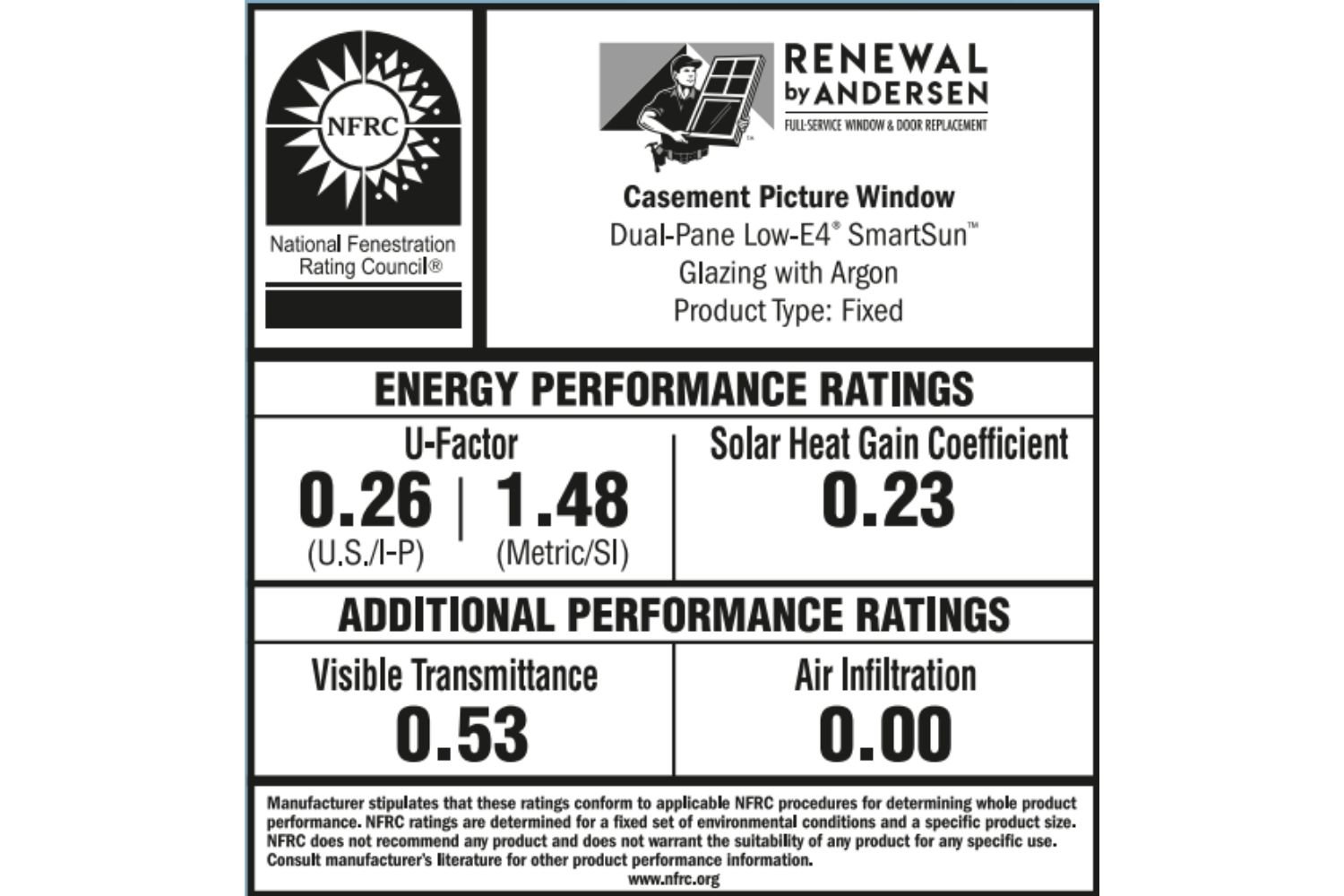
For warmer climates, Renewal by Andersen offers SmartSun™ glass, which helps block harsh UV rays and can help keep your home cool.
What’s the Best Window Glass for a Cold Climate?
Decades ago, the only thing separating your home from harsh winter weather was a single pane of glass. Now, double-pane window glass with Low-E coatings on the outside and insulating gas between the pane has become the standard in colder climates.
Some homeowners add another layer with triple-pane glass, which can help insulate your windows even more. According to Angi, you can expect to pay $300-$3,000 per triple-pane window.
If you’re considering glass coatings, clear glass windows are the best option for colder climates or regions with less sun exposure.
Even better, Low-E glass coatings can help keep your home warmer, help reduce energy loss, and allow natural light to pass through. Low-E window glass can cost 10%-15% more compared to standard windows, but they can help reduce energy loss by as much as 30%-50%.
If you’re in a cold climate, Renewal by Andersen offers enhanced triple-pane windows that help your home stay warm.
Pros and Cons of Glass Types in Each Climate
Single-pane windows are a glass of the past and are often found in older homes. Now you can get more from your windows. Compare double-pane, triple-pane, and impact-resistant glass to see how.
Double-pane glass
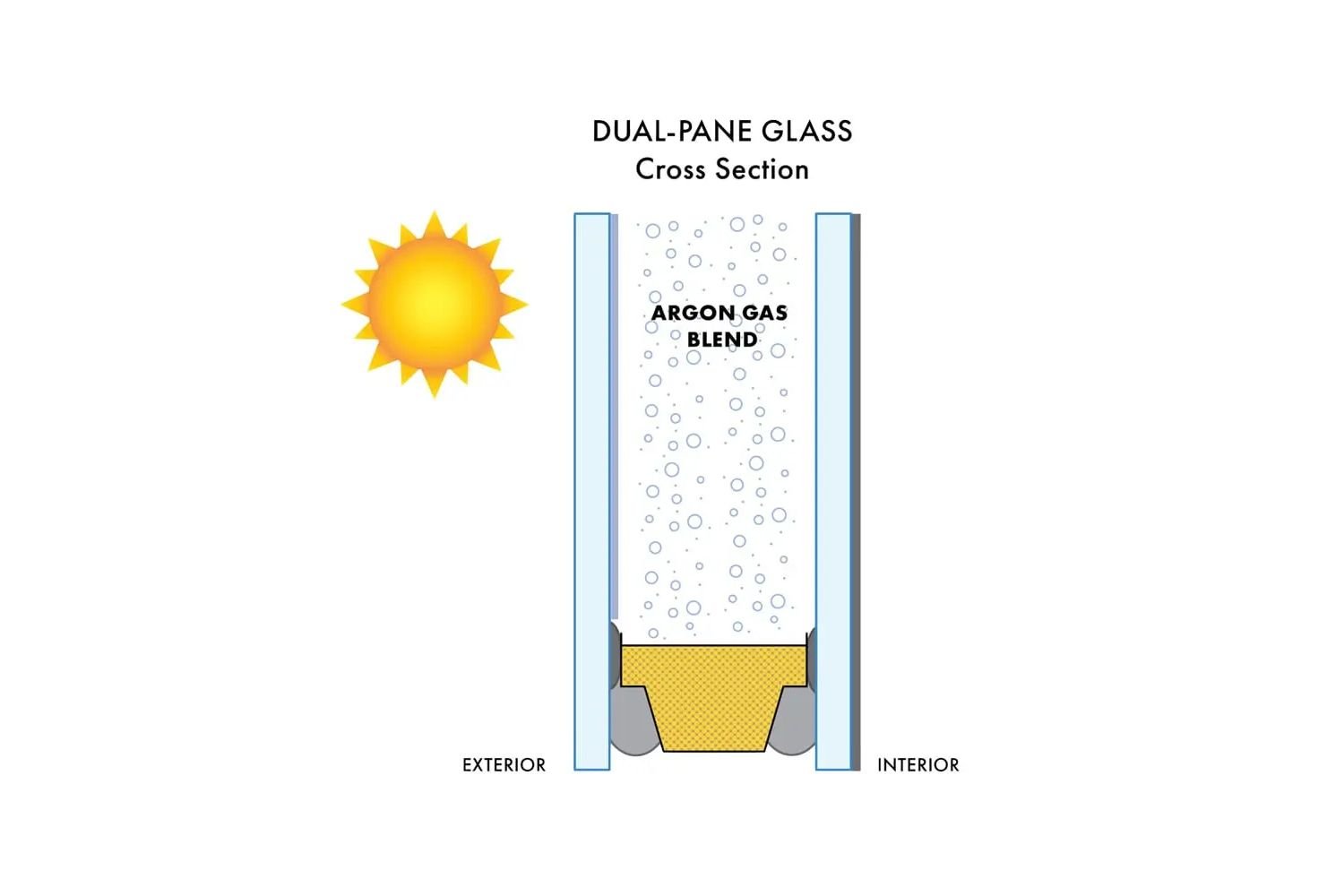
Double-pane windows have two layers of glass with up to two Low-E coatings and an air space in between. The space is often filled with an argon gas blend, which can help improve the window’s overall insulation and maintain the temperature inside your home.
Best for homes in climates that experience mild winters and summers.
Price: The average cost of a double-pane window is about $1,000 each before materials and labor. The cost for window materials and labor can vary for any replacement window project. Keep in mind that any extra glass coatings or added features will typically add to the overall window cost.
Pros:
- Strong insulation with argon gas blend filled space and up to two Low-E costings.
- More energy savings than single-pane windows with an extra layer of glass.
- Can help reduce outside noise and can slow down the transfer of heat.
Cons:
- Not as effective at reducing energy loss and sound transmission as triple-pane glass.
- Often more expensive than single-pane glass.
- Double-pane glass doesn’t reduce energy loss and outside noise as well as triple-pane glass.
Triple-pane glass
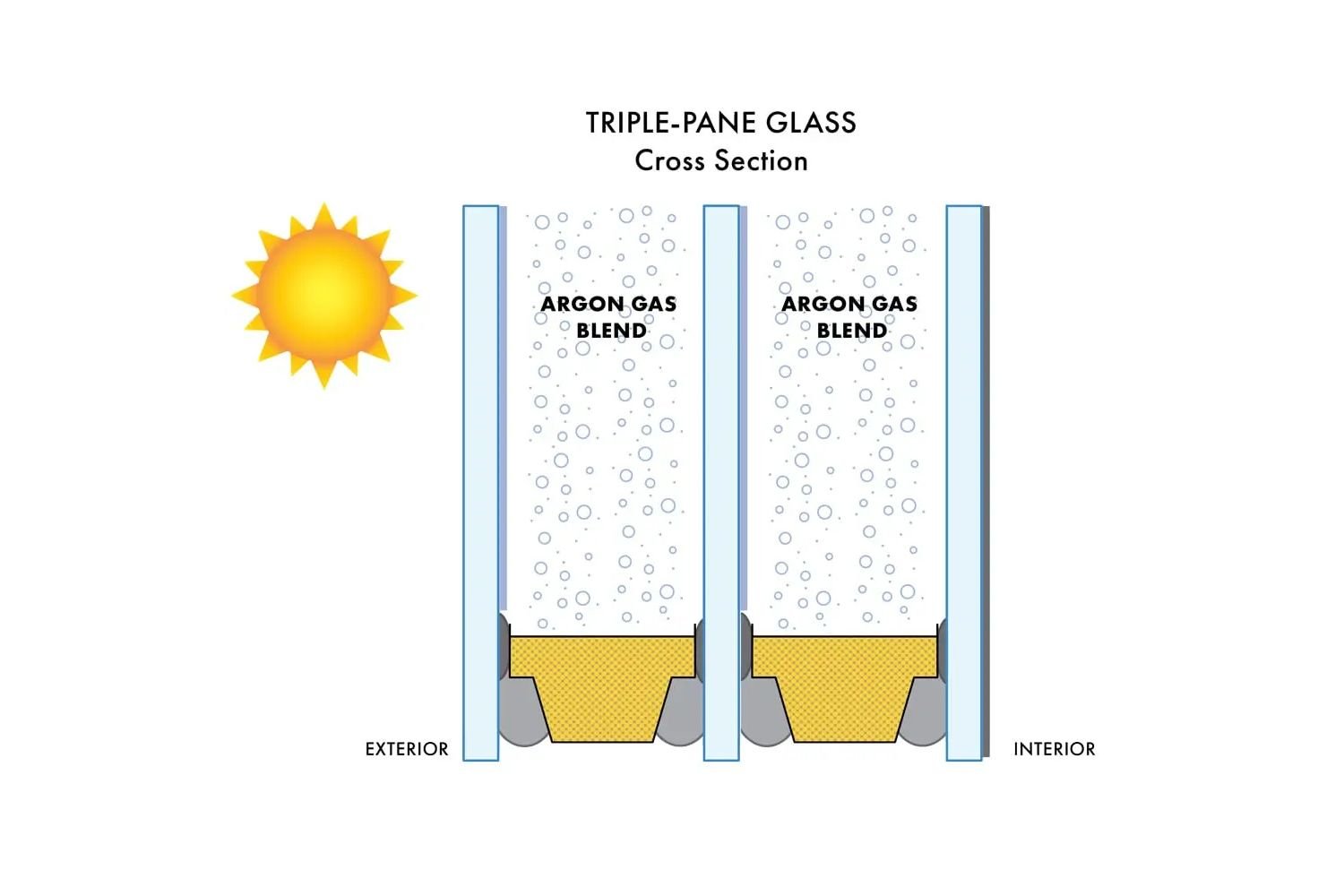
Triple-pane windows have three layers of glass. There are two air spaces between the panes that are filled with a blend of krypton and argon gas blend that helps improve window insulation. Both are non-toxic. The added layer of glass and Low-E coatings make it one of the highest-performing window glass options in colder regions.
Best for homes in colder regions that need to keep heat inside.
Price: The average cost for a triple-pane window is about $1,950. Labor can add $100-$800 depending on the size of your project.
Pros:
- Excellent energy efficiency. Two argon or krypton gas blend filled air spaces and up to three Low-E coatings make triple-pane glass the most insulating glass option.
- Can help reduce energy costs over time.
- More noise reduction than double-pane glass.
Cons:
- Triple-pane glass is more expensive and heavier than double-pane, increasing material and installation costs.
- Triple-pane glass costs more than double-pane glass up front.
- May have less visibility than double-pane because of the added layer of glass and Low-E coatings.
Select Renewal by Andersen® windows with enhanced triple-pane glass are recognized as Most Efficient of ENERGY STAR® in 2025.
Impact-resistant glass
Best for homeowners in coastal areas or high-wind regions.
Price: Impact-resistant glass can cost about $700-$2,875 per window before labor costs.
If you live in a coastal area, consider helping protect your home from flying debris with impact-resistant glass. Impact-resistant windows use a reinforced glass pane—often combined with a durable frame—designed to withstand severe force without shattering.
What makes window glass impact resistant is its ability to pass both impact testing and performance grade (PG) testing. Impact testing window glass includes simulating flying debris and putting it through thousands of pressure cycles to mimic real storm conditions.
Your window’s performance grade rating helps measure its structural integrity. The higher the rating, the better your window can perform against air, water, and pressure.
Acclaim® Coastal Impact replacement windows from Renewal by Andersen are built to withstand hurricane-force winds, torrential rains, and flying debris.*
*Tested to AAMA/WDMA/CSA 101 I.S.2/A440-08. Performance values vary by product. View product performance data at www.renewalbyandersen.com/options/coastal-impact. See your local code official for building code requirements in your area.
Which Window Glass is Best for Your Home?
Choosing the best type of window glass often means weighing how each option might perform in your climate. In a hot climate, Low-E glass can reflect sunlight and help lower cooling costs.
For a cold climate, double-pane or triple-pane glass can help insulate your home to keep more heat inside. The right window glass option may come down to the cost.
Frequently Asked Questions About Window Glass
How do I know if my windows aren’t energy efficient?
Your windows may not be energy efficient if you have drafts, frost, warmer temperatures near windows during warmer months, and higher-than-expected energy bills.
What’s the best type of window glass for hot and cold climates?
Double-pane windows are a strong all-around option because the two panes of glass can slow heat transfer in hot and cold climates.
What window glass is best for blocking harmful UV rays?
The most effective window glass for helping reduce harmful UV rays includes double- or triple-pane options with advanced coatings like Low-E4® and SmartSun™ glass. These coatings are designed to reduce harmful UV rays while still allowing natural light through.Increased UV reduction can limit some of the harmful UV rays from coming through, which can cause fading in fabrics, hardwood floors, artwork, and rugs.
What’s the difference between double-pane and triple-pane windows?
Double-pane windows have two layers of glass, while triple-pane windows have three. Triple-pane windows help provide better insulation, making them ideal for colder climates, while double-pane glass can offer a more affordable option for moderate climates. Both can help reduce more sound than single-pane windows thanks to the extra layer of glass. Triple-pane windows are typically more expensive than double-pane windows because of material and labor costs.
*AAMA/WDMA/CSA 101 I.S.2/A440-08. Performance values vary by product line. Contact us for Product Performance Data. See your local code official for building code requirements in your area.
**Values are based on comparison of Renewal by Andersen® double-hung window U-factor to the U-factor for clear double-pane glass non-metal frame default values from the 2006, 2009, 2012, 2015, and 2018 International Energy Conservation Code “Glazed Fenestration” Default Tables.
Our Hassle-Free Process

Step 1
Design Consultation
Step 2
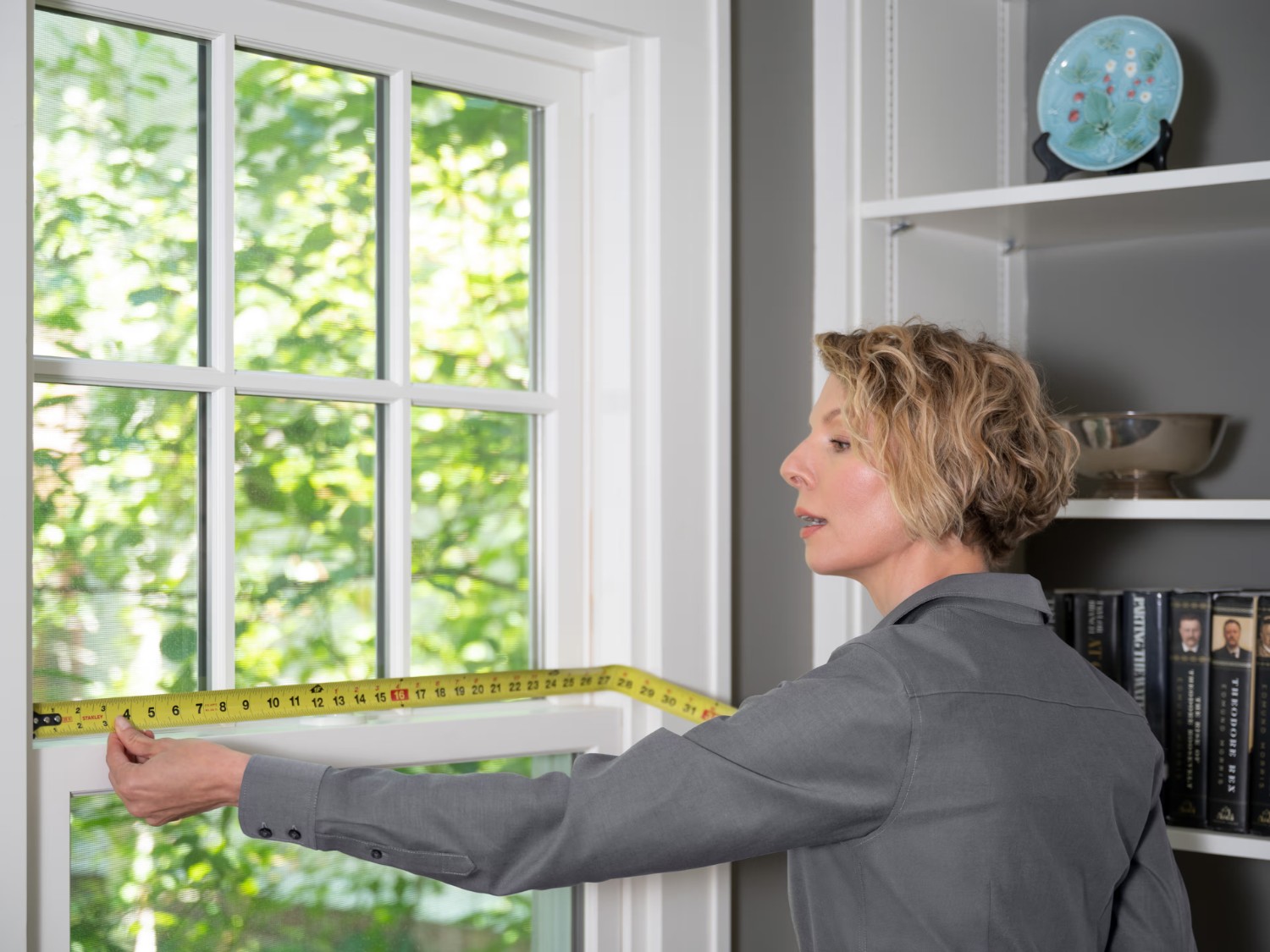
Measure and Manufacture
Step 3
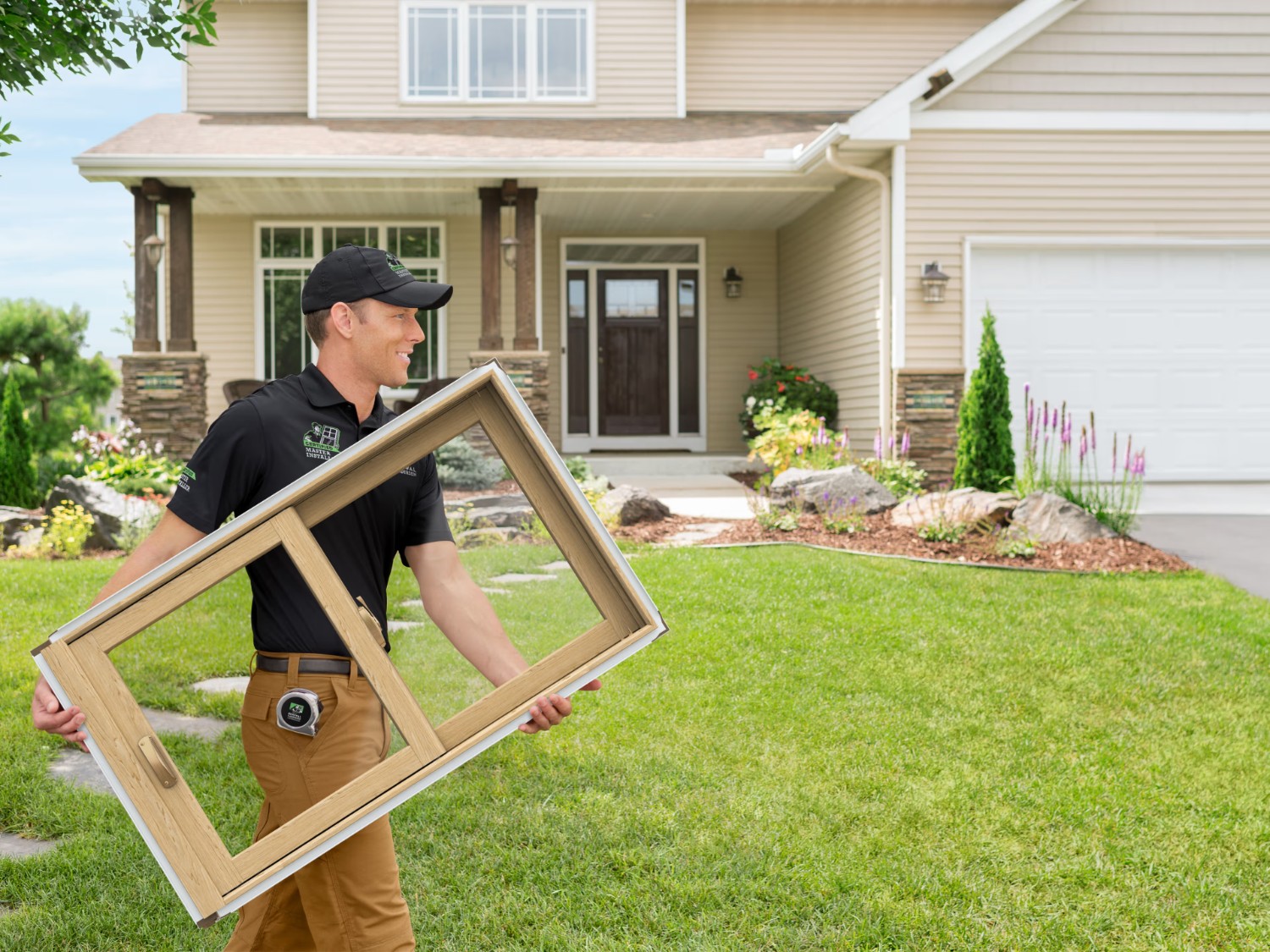
Installation
Step 4